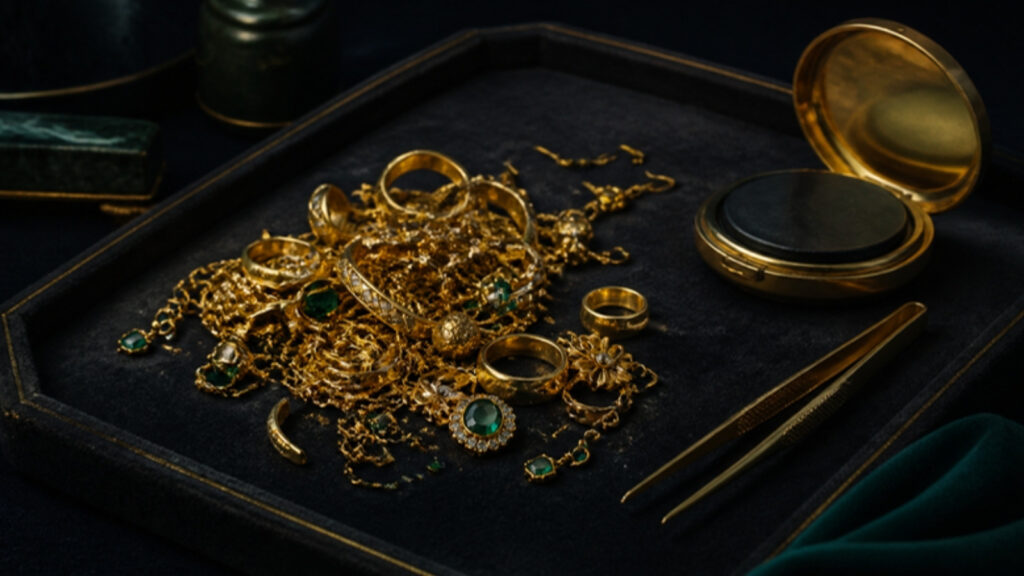
Gold jewelry and scrap gold are bought for the value of the pure gold they contain, minus a deduction for testing and refining. To know what yours is worth you need two things: the weight and the karat. With those you can work out the melt value yourself and compare offers from several buyers before you sell.
How to work out what your jewelry is worth
The karat stamp shows how much of the alloy is pure gold. In the US it usually appears as 10K, 14K or 18K, or as a number such as 417, 585 or 750, inside a ring band, on a clasp or on an earring post. The US has no mandatory hallmarking system, but federal law and the FTC Jewelry Guides require a karat mark to be accurate, and an alloy below 10 karat should not be marketed as gold.
| Mark | Karat | Pure gold in 10 g |
|---|---|---|
| 417 | 10K | 4.17 g |
| 585 | 14K | 5.85 g |
| 750 | 18K | 7.50 g |
| 916 | 22K | 9.16 g |
| 999 | 24K | 9.99 g |
The formula is simple: weight × fineness × price per gram of pure gold. Scrap buyers often weigh in pennyweight (dwt); one pennyweight is 1.555 grams, and 20 dwt make one troy ounce. An example with illustrative numbers: a 10 g chain stamped 14K (585) contains 5.85 g of pure gold. At $100 per gram, the metal is worth $585. Check today’s price on our US gold prices page or run the numbers in the gold calculator.
What you will be offered
A buyer almost always offers less than the full melt value. It has to cover testing, melting, refining and its own margin. The size of the deduction varies widely between buyers and with the amount you sell, so compare offers as a percentage of melt value rather than as a dollar figure alone.
- Stones are not gold. Their weight is normally deducted. Small stones are rarely paid for separately.
- Different karats are weighed separately. If 10K and 18K are mixed, a buyer may pay for everything at the lower fineness.
- Gold-plated, gold-filled (GF) and vermeil items contain little gold and are bought at a low price, if at all.
- Designer, vintage and signed pieces may be worth more as jewelry than as metal. An auction house or specialist jeweler can give a second opinion.
Where you can sell
| Buyer | Advantages | Watch out for |
|---|---|---|
| Local coin shop or bullion dealer | Transparent price per gram or dwt, often a smaller deduction | Not every dealer buys jewelry or small lots |
| Jeweler | Can value the piece as jewelry, not just metal | Offers vary widely |
| Pawn shop | Fast cash | Deductions are often larger |
| Mail-in gold buyer | Convenient, price based on weight and karat | Shipping risk, return terms and payment time |
| Auction house | Can reach collectors for valuable pieces | Seller’s commission and waiting time |
Some of the dealers on our US bullion dealers page also buy scrap. Check their minimum lot size and the karats they accept.
How to prepare
- Sort your jewelry by karat stamp.
- Weigh each group on an accurate kitchen or jewelry scale.
- Work out the melt value for each group.
- Remove stones if you can do so without damaging the metal, or at least estimate their weight.
- Photograph everything before handing it over.
- Get offers from at least two or three buyers.
Testing on the spot
Reputable buyers test the fineness in front of you, usually with an X-ray fluorescence (XRF) analyzer that does not damage the item, or with the traditional acid and touchstone test. Watch the weighing and the testing, and ask for the weight and karat to be written on your receipt. A missing stamp does not mean an item is not gold: marks wear off and resizing removes them. A stamp on its own is not proof either, because fakes exist. Until you accept the price you are not obliged to sell.
With mail-in buyers, read the terms before shipping: how long you have to accept or reject the offer, whether items are returned free of charge, and how payment is made. Insure the package for its full value.
Coins and bars are not scrap
If your old gold includes bullion coins or bars, keep them apart from the jewelry. An American Eagle or American Buffalo is bought back at its own price, which is usually much closer to melt value than a scrap offer. A coin set in a bezel or soldered to a chain may be valued as scrap once damaged, so ask how the price is worked out first.
ID, state rules and tax
Many states and cities license secondhand precious metal buyers and require them to record the seller’s government-issued ID; some also require the buyer to hold items for a set period before melting. Expect to show ID. A business that receives more than $10,000 in cash in one or related transactions must file IRS Form 8300.
For tax purposes, gold jewelry is a collectible. A gain on jewelry held more than one year is taxed at a maximum federal rate of 28%; a gain on jewelry held one year or less is taxed as ordinary income. A loss on personal-use jewelry is not deductible. Because retail jewelry is usually bought well above its melt value, many sellers of old pieces have no taxable gain, but keep records of what you received.
Bottom line
Gold jewelry and scrap are bought for their pure gold content minus a deduction. Melt value is weight × fineness × price per gram. Stones, plating and mixed karats reduce what you receive. Offers differ between buyers, and testing should happen in front of you.
Sources: FTC Jewelry Guides (16 CFR Part 23) · IRS Topic 409: Capital gains and losses · IRS Form 8300 reference guide
This is general information, not tax or investment advice.
Frequently asked questions
How much is 14K gold worth per gram?
14K gold is 14/24, or about 58.3%, pure gold and is often stamped 585. Its melt value per gram is that fraction times the price per gram of pure gold. Buyers usually offer less because of refining and testing costs.
Are the stones in my jewelry paid for?
Usually not. The weight of stones is deducted and small stones are rarely paid for separately. Larger or valuable stones are better appraised separately.
Where can I sell gold jewelry in the US?
Local coin shops and bullion dealers that buy scrap, jewelers, pawn shops, mail-in gold buyers and, for valuable pieces, auction houses. Compare offers as a percentage of melt value.
Do I pay tax when I sell old gold jewelry?
A gain is taxable: up to 28% federally if held more than a year, as ordinary income if held a year or less. A loss on personal-use jewelry is not deductible.