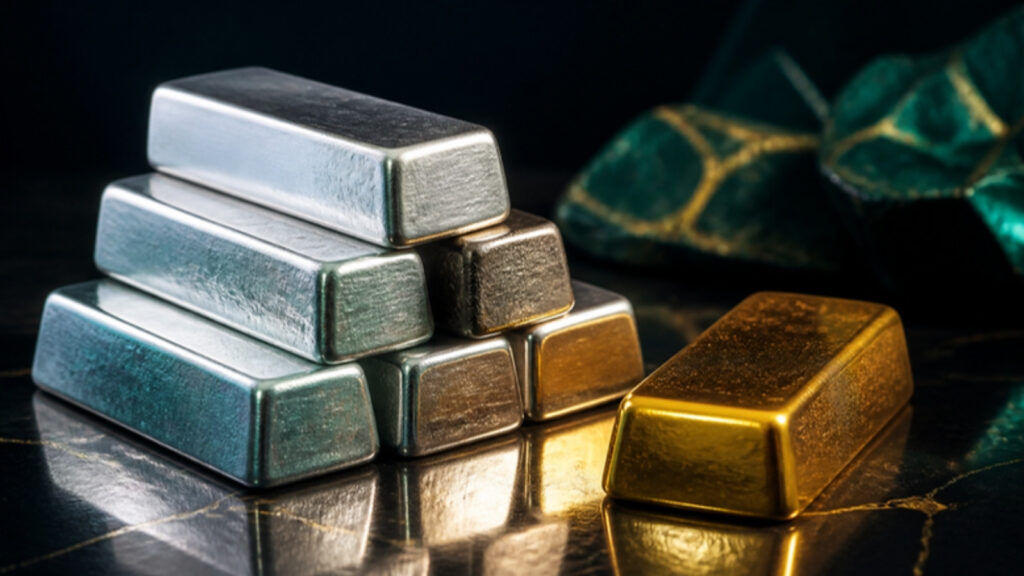
Platinum and palladium are rare precious metals, but their prices depend above all on industry, especially catalytic converters for cars, and on mining in a handful of countries. That makes them more volatile than gold. In the US there is no VAT, but dealer spreads are wider than for gold, fewer dealers trade them and long-term gains are taxed as collectibles at up to 28%, so whether they suit you depends on whether you accept those risks and costs.
What they are used for
- Palladium: more than 80% of demand comes from autocatalysts, mainly in gasoline cars. It is also used in electronics and dentistry.
- Platinum: autocatalysts (particularly for diesel engines), jewelry, the chemical and glass industries, petroleum refining, medicine and hydrogen fuel cells. Investment demand is a smaller share.
This means prices react to car sales, emissions rules and the shift to battery electric vehicles, which need no catalytic converter. When one metal becomes very expensive, manufacturers partly substitute the other, as happened after palladium’s record prices in 2022.
For long periods platinum was more expensive than gold. Since the mid-2010s, however, it has traded well below it. Rarity alone does not set the price: industrial demand and investor interest decide it. New uses such as hydrogen technology could add to platinum demand, but nobody can say with confidence how much or when.
Where they come from: concentrated supply
Mining is concentrated in a few countries. According to the US Geological Survey, South Africa produced about 70% of the world’s mined platinum in 2024, followed by Russia and Zimbabwe. Russia’s Nornickel produces about 40% of the world’s palladium. The US has only small domestic production, from mines in Montana.
Strikes, power outages in South Africa or sanctions on Russia can therefore move prices sharply. In April 2022 the London Platinum and Palladium Market (LPPM) suspended two Russian refiners, so their newly produced metal no longer counted as Good Delivery in London. The World Platinum Investment Council has reported platinum market deficits in several consecutive years.
Peaks and crashes
| Metal | Event | Price (approx.) |
|---|---|---|
| Platinum | Peak, March 2008 | $2,280–2,300 |
| Platinum | Low, February 2024 | about $875 |
| Platinum | New record, late January 2026 | about $2,900 |
| Palladium | Record, March 7, 2022 | about $3,440 |
| Palladium | Low, February 2024 | about $860 |
Palladium lost about 75% in under two years. Platinum spent more than 15 years below its 2008 peak before passing it in 2026, and then fell sharply again. In February 2024 palladium became cheaper than platinum for the first time since 2018.
Comparison with gold and silver
| Factor | Gold | Silver | Platinum and palladium |
|---|---|---|---|
| Federal tax on long-term gains | Collectible, up to 28% | Collectible, up to 28% | Collectible, up to 28% |
| Main demand | Jewelry, investment, central banks | Industry and investment | Mainly industry, especially cars |
| Number of dealers | Many | Many | Fewer |
| Price swings | Moderate | Large | Large |
| Mine supply | Spread across many countries | Spread, often as a by-product | Concentrated in a few countries |
Selling is different too. A gold bar or Gold Eagle can be sold to almost any dealer. With a platinum or palladium coin you may need to shop around for a buyer or accept a lower buy-back price, so find out where you could sell before you buy.
US costs and tax
- Premiums and spreads: fewer dealers stock and buy back these metals, so the gap between buying and selling prices is usually wider than for gold. See which firms trade them in our US bullion dealers directory, which includes dealers such as Hero Bullion, SD Bullion and Summit Metals.
- Sales tax: rules vary by state; some exempt bullion, others tax it.
- Federal tax: platinum and palladium bullion and coins are collectibles. Gains on metal held more than one year are taxed at your ordinary rate up to a maximum of 28%; short-term gains are taxed as ordinary income.
- IRAs: the American Platinum Eagle and platinum or palladium bullion meeting minimum fineness standards can be held in a self-directed IRA, but only through a trustee or custodian.
An illustrative example: if you buy a platinum coin at 10% above spot and the dealer buys it back at 5% below spot, the spot price has to rise by about 16% before you get your money back, before any sales tax or shipping. Smaller bars and single coins usually carry higher premiums per ounce, which pushes the break-even point further away. Keep the invoice for every purchase and sale to document your cost basis.
Forms on offer
- Bars from one ounce upwards from recognized refiners.
- Coins such as the American Platinum Eagle (issued since 1997), the American Palladium Eagle (since 2017) and the Canadian platinum or palladium Maple Leaf.
- Exchange-traded funds backed by metal in a vault. They are easy to trade but charge an annual expense ratio, you never hold the metal, and physically backed funds structured as grantor trusts are generally taxed like the metal itself. You can follow listed markets on our US stock market page.
Questions before buying
- Do you accept that the price depends heavily on the auto industry?
- Is there a dealer that will buy this product back from you?
- Have you worked out the premium, the spread and any sales tax?
- Where will you store the metal and what will storage and insurance cost?
- How much of your savings could you hold in such a volatile asset?
For the more widely traded metals, compare US gold prices and US silver prices.
Bottom line
Platinum and palladium are mainly industrial metals, with supply concentrated in South Africa and Russia. Their prices are far more volatile than gold: palladium lost about 75% after its 2022 record. In the US they carry no VAT, but spreads are wider, fewer dealers buy them back and long-term gains are taxed as collectibles at up to 28%.
Sources: USGS: Platinum-group metals · World Platinum Investment Council · IRS Topic 409 · US Mint
This is general information, not tax or investment advice.
Frequently asked questions
How are platinum and palladium taxed in the US?
They are collectibles for federal tax purposes. Long-term gains are taxed at your ordinary rate up to a maximum of 28%, and short-term gains as ordinary income.
Can I hold platinum or palladium in an IRA?
Yes. The American Platinum Eagle and platinum or palladium bullion meeting minimum fineness standards can be held in a self-directed IRA through a trustee or custodian.
Why did palladium fall so much after 2022?
After its record of about $3,440 in March 2022, carmakers partly switched to cheaper platinum and electric car sales grew. By February 2024 palladium had fallen to about $860.
Where are platinum and palladium mined?
About 70% of mined platinum comes from South Africa, according to the USGS. Russia's Nornickel produces about 40% of the world's palladium.