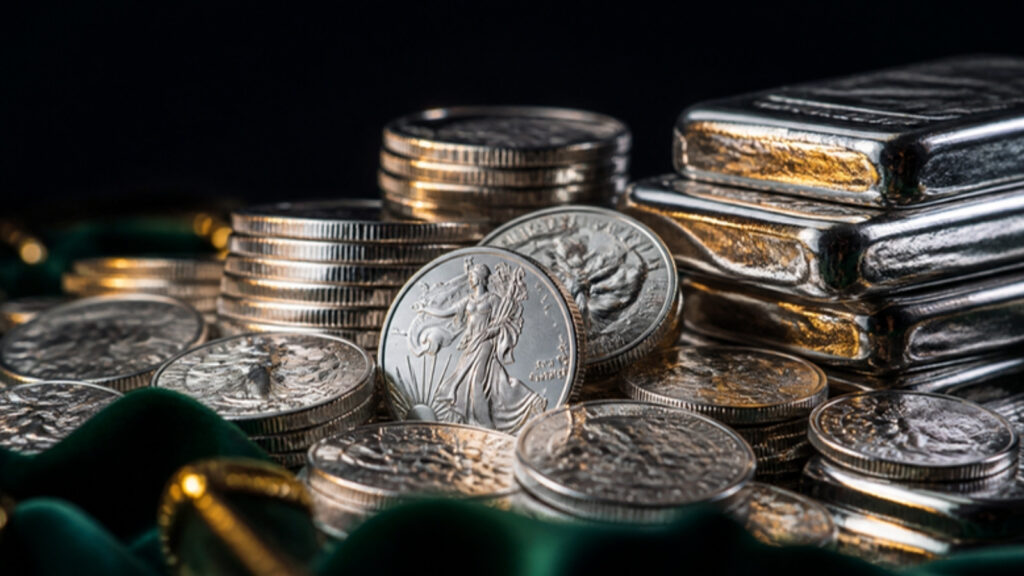
Silver is cheaper per ounce than gold and is bought both by investors and by industry. In the UK, however, silver bought for delivery carries 20% VAT, dealer spreads are wide and the price swings far more sharply than gold in both directions. The metal therefore has to rise a long way before you break even, although gains on silver Britannias are free of Capital Gains Tax.
What drives the silver price
Silver has a dual nature. It is an investment metal like gold, but also an industrial raw material. According to the Silver Institute, industrial demand reached a record of about 680 million ounces in 2024, more than half of total demand. Silver is used in solar panels, electronics, cars and medicine.
Mine output in 2024 was about 820 million ounces. Demand exceeded supply for the fourth year in a row, with the gap covered from existing stocks. Because of its industrial role, silver often falls further than gold in a downturn and often rises faster when precious metals are in favour.
Investment demand from coins, bars and exchange-traded products makes up much of the rest. It can swing sharply from one year to the next, which adds to the volatility of the price.
Advantages
- Low price per unit. You can buy in small amounts; a one-ounce coin costs a fraction of a gold coin.
- Real industrial demand. Silver is consumed, not just stored.
- Bigger moves on the way up. When precious metals rise, silver has often outpaced gold. In late January 2026 it reached a record above $120 an ounce.
- CGT-free coins. Silver Britannias are UK legal tender, so gains on them are exempt from Capital Gains Tax.
- Wide choice. Bars from one ounce to one kilogram and more, and well-known coins such as the Britannia, Maple Leaf and Vienna Philharmonic.
Disadvantages
- 20% VAT. Investment gold is VAT-exempt; silver is not. Some dealers sell pre-owned coins under the VAT margin scheme, where VAT is charged only on the dealer’s margin. Either way, you do not get the VAT back when you sell.
- Wide spreads. The gap between buying and selling prices is often far larger than for gold bars.
- Sharp falls. On 30 January 2026 silver lost roughly a quarter of its value in a single day, its worst day since 1980. From its 2011 high near $50 to its late-2015 low, it lost about 70%.
- Storage space. At a gold/silver ratio of 80, the money that buys one ounce of gold buys 80 ounces of silver, more than 2.4 kg of metal. That matters for safes, insurance and transport.
- Tarnishing. Silver tarnishes over time. This does not change the metal content, but some buyers pay less for spotted or scratched coins.
How far it must rise for you to break even
An illustrative example: the spot price of silver is £1,000 per kilogram. A dealer sells a 1 kg bar for about £1,260 (20% VAT plus a 5% premium) and buys it back for about £950. To get your £1,260 back when you sell, spot would need to reach about £1,330, roughly 33% above its level when you bought. For small bars and single coins the premium per gram is usually higher, so the break-even point is further away.
Some dealers offer storage in a bonded warehouse, where VAT is not charged while the metal stays there; it becomes payable if you take delivery. Storage fees then apply instead. Compare real prices on our UK silver prices page and in the UK bullion dealers directory.
UK tax on silver
- VAT: 20% on silver bought for delivery, or VAT on the margin for some pre-owned coins.
- Capital Gains Tax on Britannias: exempt, because HMRC treats UK legal-tender coins as sterling currency.
- Capital Gains Tax on bars and foreign coins: gains are taxable. The annual exempt amount is £3,000, and since 30 October 2024 the main rates have been 18% for basic-rate and 24% for higher and additional-rate taxpayers. Check gov.uk for the current year.
- Records: keep invoices for every purchase and sale so you can show your acquisition cost.
Silver without the metal
Some investors buy silver through the stock market. Physically backed silver ETCs are listed securities backed by silver held in a vault. They carry no VAT and the market spread is small, but there is an annual charge and you depend on the issuer and your platform. Many can be held in a stocks and shares ISA, where gains are sheltered; check eligibility with your provider.
Another route is shares in silver-mining companies, which usually move even more sharply than the metal. You can follow equity markets on our UK stock market page.
Checklist before buying
- Compare the buy-back price as well as the selling price for the same product.
- Check whether the price includes VAT, uses the margin scheme or is for VAT-free storage.
- Decide where and how you will store the metal.
- Keep the original packaging and paperwork to make resale easier.
- Be wary of private sellers offering silver below market price; fakes do circulate.
Bottom line
Silver is both an investment and an industrial metal, with a low price per unit and sharp price swings. In the UK it carries 20% VAT and wide spreads, so the price has to rise by tens of percent to cover costs. Silver Britannias are exempt from Capital Gains Tax; bars and foreign coins are not.
Sources: Silver Institute – World Silver Survey · HMRC CG78305 · gov.uk: CGT rates and allowances · The Royal Mint
This is general information, not tax or investment advice.
Frequently asked questions
Is there VAT on silver in the UK?
Yes. Silver bought for delivery carries 20% VAT. Some pre-owned coins are sold under the margin scheme, and some dealers offer VAT-free storage in a bonded warehouse.
Are silver Britannias free of Capital Gains Tax?
Yes. They are UK legal tender, which HMRC treats as sterling currency, so gains on them are exempt from CGT. Silver bars and foreign coins are not exempt.
Why is silver more volatile than gold?
Its market is smaller and more than half of demand comes from industry, so the price reacts strongly both to the economic cycle and to investment flows.
How much does silver need to rise to break even?
It depends on the product and dealer. With 20% VAT, a dealer premium and a buy-back spread, the price often needs to rise by around a third or more before a sale returns your outlay.