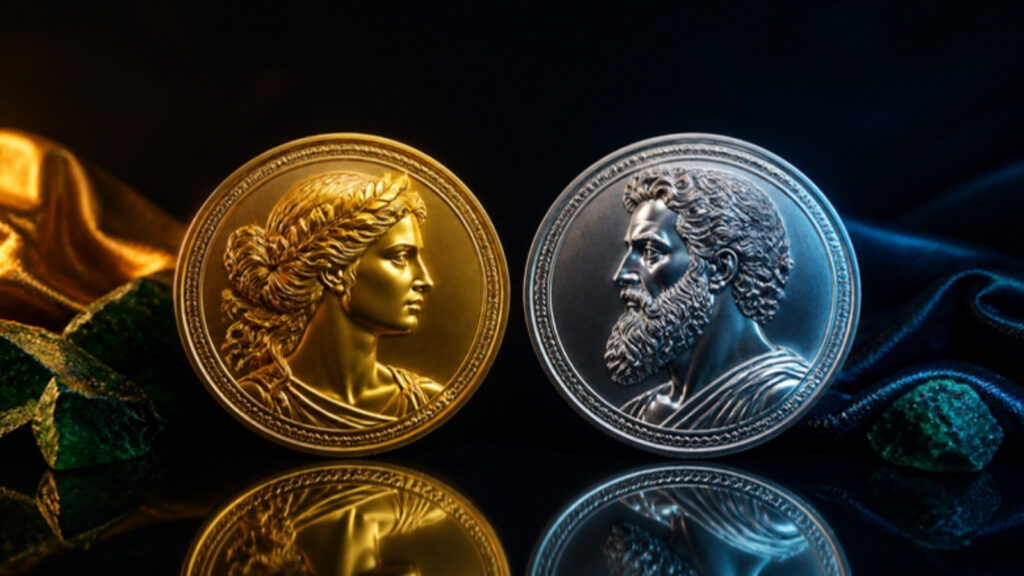
Gold and silver are both physical precious metals, but in the UK they differ sharply in cost: investment gold is exempt from VAT, while silver bullion is normally sold with 20% VAT on top. Silver prices also tend to move more sharply than gold, and silver takes far more space to store for the same value, so the two metals carry different costs and risks even though they are often bought for similar reasons.
The key differences at a glance
| Factor | Gold | Silver |
|---|---|---|
| VAT on purchase (UK) | Exempt for investment gold | Normally 20% |
| Capital Gains Tax | Sovereigns and gold Britannias exempt; bars chargeable | Bars chargeable; check HMRC guidance for legal tender coins |
| Price swings | Historically smaller | Historically larger |
| Main demand | Investment, jewellery, central banks | Industry, investment, jewellery |
| Space for the same value | Very little | Many times more |
| Dealer spread | Usually narrower | Usually wider |
Cost: VAT is the biggest difference
HMRC exempts investment gold from VAT – bars of at least 995 fineness and qualifying gold coins. There is no equivalent exemption for silver, so a UK buyer normally pays 20% VAT on silver bars and coins bought from a UK dealer. VAT is not refunded when you sell, and dealers buy back at a price that does not include it.
An illustrative example (not current prices): if you spend £1,200 on silver including VAT, £200 goes to VAT and £1,000 to the product itself. If the dealer’s premium is 10% of the metal value, the silver content is worth about £909. The silver price would need to rise by roughly a third before you could sell back at what you paid. Spending £1,200 on a gold bar with a 3% premium leaves about £1,165 of metal value.
Some dealers sell pre-owned silver coins under the VAT margin scheme, where VAT is charged only on the dealer’s margin, which can reduce the cost. Ask the dealer how VAT is applied before you buy.
Capital Gains Tax
Gains on gold bars and foreign gold coins are potentially chargeable, while HMRC treats Sovereigns (from 1837) and gold Britannias as sterling currency, exempt from CGT. Silver bars and foreign silver coins are chargeable assets in the same way as gold bars. Silver Britannias are UK legal tender, and many dealers describe them as CGT-exempt on the same basis as gold coins; HMRC’s Capital Gains Manual is the place to confirm how a specific coin is treated. The annual exempt amount and CGT rates are set by the government and change, so check gov.uk for current figures.
Risk: how prices behave
Both metals are priced in US dollars on world markets, so the pound’s exchange rate also affects what you see in sterling. Silver has historically shown larger percentage moves than gold in both directions, partly because its market is much smaller and a large share of demand comes from industry, such as electronics and solar panels. Gold’s demand is dominated by investment, jewellery and central bank buying.
The gold-to-silver ratio – how many ounces of silver buy one ounce of gold – is often quoted to compare the two. It changes over time and does not predict future prices. You can follow both metals on our gold price chart and UK silver prices page.
Storage and practicality
Silver is far cheaper per ounce, so the same amount of money buys a much larger and heavier quantity. A few thousand pounds in gold fits in a small envelope; the same value in silver may fill a box and weigh several kilograms. This affects home storage, insurance and vault fees, some of which are charged by weight or volume. Silver can also tarnish, which does not change its metal content but can affect what collectors pay for coins.
Buying and selling
- Spreads: dealer spreads on silver are usually wider than on gold, partly because of handling costs per unit of value.
- Popular products: gold bars, Sovereigns and Britannias; silver Britannias, Maple Leafs and 1 kg bars.
- Dealers: UK examples include The Royal Mint, Chards, Baird & Co, Physical Gold, Tavex UK, Gold.co.uk and Gold Investments. Compare prices for both metals on our UK gold prices and silver prices pages.
Who tends to hold which
Buyers focused on cost per pound invested and simple storage often look at gold first because of the VAT exemption. Buyers who want smaller units, are prepared for larger price swings, or are interested in silver’s industrial role sometimes hold a share in silver. Many holders keep both. Whatever the mix, it helps to know the total cost including VAT, premium and storage before you buy.
Common mistakes when comparing the two
- Comparing prices without VAT. A silver price quoted ex-VAT looks cheaper than what you will actually pay at checkout.
- Looking only at the price per ounce. Silver’s low price per ounce says nothing about value for money; what matters is the premium, VAT and spread as a share of what you spend.
- Underestimating storage. Several kilograms of silver may exceed the single-item limits of a home insurance policy or need a bigger safe.
- Assuming both metals move together. They often move in the same direction, but not always and not by the same amount.
- Forgetting the exchange rate. A stronger pound can lower sterling prices of both metals even when dollar prices are flat.
Bottom line
In the UK, gold has a structural cost advantage because investment gold is VAT-exempt, while silver normally carries 20% VAT. Silver is cheaper per ounce but more volatile, bulkier and usually has wider spreads. Both can be compared live on HawkValue.
Sources: HMRC – VAT Notice 701/21 · gov.uk – Capital Gains Tax · The Silver Institute · World Gold Council
This is general information, not tax or investment advice.
Frequently asked questions
Is there VAT on silver in the UK?
Yes. Silver bullion bought from a UK dealer is normally subject to 20% VAT. Investment gold is exempt. Some pre-owned coins are sold under the VAT margin scheme.
Is silver more volatile than gold?
Historically, silver prices have moved more sharply than gold in both directions. Its market is smaller and a large part of demand comes from industry.
Do I pay Capital Gains Tax on silver?
Silver bars and foreign silver coins are chargeable assets. Silver Britannias are UK legal tender; check HMRC guidance on how a specific coin is treated.
What is the gold-to-silver ratio?
It is the number of ounces of silver needed to buy one ounce of gold. It changes over time and is used to compare the two metals, not to predict prices.